
Methods compared
Pure water vs traditional window cleaning
There are two ways to clean a window: pure water through a pole, or a bucket, washer and squeegee. Here’s how they differ, and why we use each one where it works best.
- Rinsed with pure water, left to dry
- Upstairs windows cleaned from the ground with a pole
- Wickford & Rayleigh homes only
Side by side
The two methods compared
| Pure water and a pole | Traditional: washer and squeegee | |
|---|---|---|
| What goes on the glass | Tap water with the minerals taken out | Tap water with soap or detergent |
| How upstairs is reached | From the ground with a pole | Usually working at height |
| How it’s finished | Rinsed and left to dry | Wiped off with a squeegee and cloth |
| What you may see after | Glass looking wet for a while | Possible streaks or soap residue at the edges |
| Best for | Outside glass | Interior glass, where rinse water can’t run away |
| What we use it for | Outside windows | Interior windows |
How pure water cleaning works
Tap water carries dissolved minerals. When a drop dries on glass, those minerals stay behind as a small white spot. Pure water has had them taken out, by reverse osmosis and deionisation, so there’s nothing left to dry onto the window.
We make it in our van. It flows up a water-fed pole to a soft brush, so we can scrub and rinse the glass from the ground, upstairs windows included. Then we leave it to dry.

Traditional
How traditional cleaning works
The traditional method uses a washer, a soft sleeve on a handle, dipped in soapy water. It loosens the dirt, then a squeegee pulls the water off in clean strokes. Drips at the edges are wiped with a cloth.
Done well, it gives clear glass. Outside, upstairs windows usually mean working at height, and any soap left in seals can run out later. Inside, it’s the right method, because rinse water has nowhere to go indoors.

Which method suits which window
Outside glass
Pure water through a pole. It rinses dirt away and dries clear, from the ground.
Interior glass
Washer and squeegee by hand. No rinse water left on your floors.
Delicate windows
Cracked paint or oiled timber needs care with either method, so let us know when we reply.
First pure-water clean
A few spots can show while old soap residue runs out of the seals.
Rain
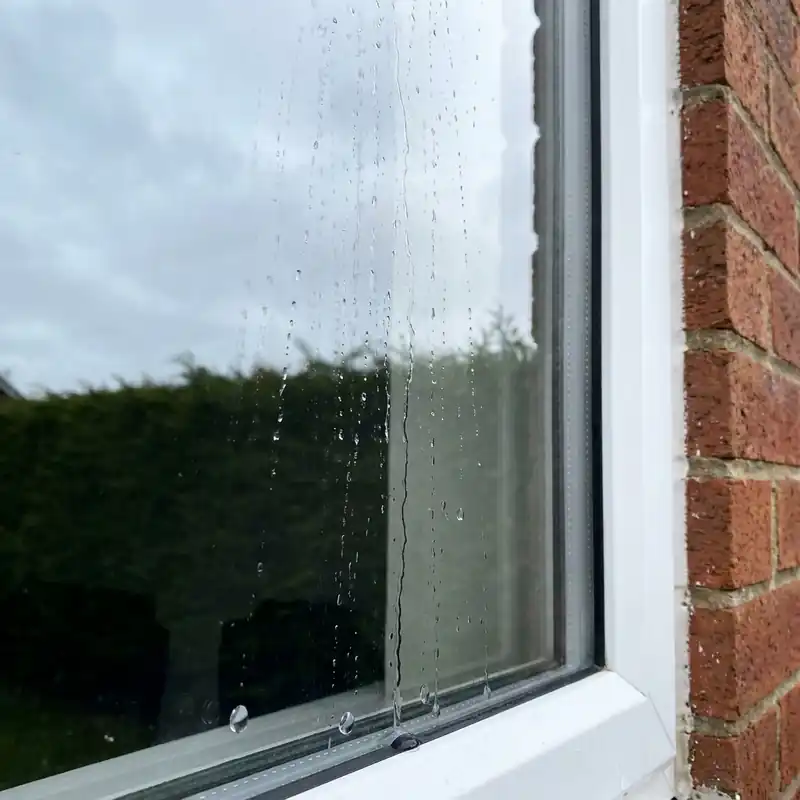
Light rain won’t stop an outside clean. The glass is rinsed with pure water, and light rain doesn’t leave mineral spots.
Not sure?
Send a quote request and we’ll tell you which method we’d use.
FAQs
Pure water vs traditional: questions
Is pure water better than a squeegee?
For outside glass, yes. It gives a clearer finish and reaches upstairs from the ground. For interior glass, the squeegee is the right tool. Is pure water window cleaning better? goes into more detail.
Why do my windows look wet after a pure-water clean?
Because the water is left to dry. With no minerals in it, it dries clear. Why windows look wet.
Does pure water use soap?
No. The water itself does the work, with a soft brush.
Why might I see spots after switching?
Old soap residue can run out of the seals for the first few cleans. Spots after the first clean explains it.
Which do you use?
We use pure water through a pole for outside windows, and a washer and squeegee by hand for interior windows.
Is hard water a problem for traditional cleaning?
If tap water dries on glass, hard water leaves more marks. Does hard water leave spots?

Get a window cleaning quote
That’s how we work: pure water outside, interior by hand. Send us a quote request and we’ll reply with a price for your home.
Get my quote- Pure water outside
- Interior by hand